Why Embedded Systems Engineering Deserves More Respect Than It Gets

When people think of engineering that changes the world, they picture sleek apps, cloud platforms, or self-driving cars. Rarely do they picture the small microcontroller sitting inside a hospital infusion pump, making sure the right dose reaches the patient at the right rate. That invisible work — the discipline of embedded systems engineering — carries… Read More: Why Embedded Systems Engineering Deserves More Respect Than It Gets »


Salt Typhoon’s Reckoning: How a Year-Long Telecom Breach Is Rewriting Network Architecture for 2026 and Beyond

The Breach That Shouldn’t Have Happened (But Did, For Over a Year) Let’s start with the part that still makes security professionals wince. Late 2024 brought confirmation of something most of us in infrastructure had nervously suspected for months: Chinese state-sponsored actors had maintained persistent access to at least nine major US telecom carriers, including… Read More: Salt Typhoon’s Reckoning: How a Year-Long Telecom Breach Is Rewriting… »

Rust in the Linux Kernel at Scale: Two Years of Merge Commits Later, What the Kernel Mailing List Drama Actually Tells Us

The Numbers Tell a Story Worth Reading When Rust support landed in the Linux kernel with version 6.1 in late 2022, we were looking at approximately 13,000 lines of code. That was the scaffolding phase, the proof-of-concept territory where most people still treated it as an interesting experiment rather than production infrastructure. By early 2026,… Read More: Rust in the Linux Kernel at Scale: Two Years of… »

WebAssembly Components and WASI 0.2 Are Finally Production-Ready — Why This Is the Runtime Story Nobody Is Talking About Enough

The Quiet Revolution That Shipped Last Year If you’ve been paying attention to the WebAssembly ecosystem, you already know that something shifted in early 2024. The Bytecode Alliance released WASI 0.2, introducing the Component Model—a formal specification for how WebAssembly modules can talk to each other across language boundaries with zero ambiguity. This wasn’t incremental.… Read More: WebAssembly Components and WASI 0.2 Are Finally Production-Ready — Why… »

Salt Typhoon, SMS 2FA, and Why Your API Security Roadmap Just Got Real

The Breach That Changed Everything (And Probably Your Threat Model) Last December, the U.S. government confirmed what security researchers had been muttering about in Slack channels for months: Chinese state-sponsored actors had successfully compromised at least nine major American telecommunications companies. We’re talking AT&T, Verizon, and others. The attackers didn’t just peek at the network… Read More: Salt Typhoon, SMS 2FA, and Why Your API Security Roadmap… »

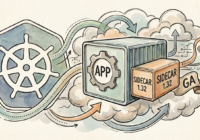
Kubernetes 1.32’s Native Sidecar Containers: The GA Release That Actually Matters

The Problem We’ve Been Living With If you’ve spent any real time operating Kubernetes at scale, you know the sidecar injection story. Your service mesh—Istio, Linkerd, whatever you’re running—needs to inject networking proxies into your pods. The old way was a dance: an admission webhook intercepts pod creation, mutates the spec by adding init containers… Read More: Kubernetes 1.32’s Native Sidecar Containers: The GA Release That Actually… »

Autonomous Agents in the Enterprise: The Security Reckoning OpenAI Isn’t Talking About

The Agent Revolution Arrives, Ready or Not OpenAI shipped Operator in January 2025, and I’ll be direct: it’s an impressive piece of engineering. An autonomous web agent that can browse, fill forms, and chain multi-step tasks without requiring human sign-off on each action represents a genuine leap in what large language models can accomplish in… Read More: Autonomous Agents in the Enterprise: The Security Reckoning OpenAI Isn’t… »

Operator Agents Hit Enterprise — And The Security Debt is Staggering

The Capability is Real, and It’s Already in Your Fortune 500 Neighbor’s Production OpenAI shipped Operator in January 2025, and I’ll be honest: the demo was smooth enough to make you forget you were watching a machine navigate the web like a slightly caffeinated junior analyst. The system uses what they call a Computer-Using Agent… Read More: Operator Agents Hit Enterprise — And The Security Debt is… »

OpenTofu vs. Terraform in 2026: The Fork Has Matured and the Decision Is No Longer Obvious

The License Change That Started Everything If you were paying attention in August 2023, you remember the exact moment HashiCorp announced it was moving Terraform to the Business Source License. The internet did what it does best: collectively lost its mind. After years of treating Terraform as the de facto standard for infrastructure-as-code, suddenly the… Read More: OpenTofu vs. Terraform in 2026: The Fork Has Matured and… »

Platform Engineering in 2026: Why Your Internal Developer Platform Still Has a 40% Adoption Problem

The Forecast That Became Partially True Back in 2023, Gartner made a prediction that felt almost inevitable at the time: by 2026, roughly 80 percent of large engineering organizations would have built out dedicated platform engineering teams. If you’ve been in this space for the last three years, you know they nailed the structural part.… Read More: Platform Engineering in 2026: Why Your Internal Developer Platform Still… »